
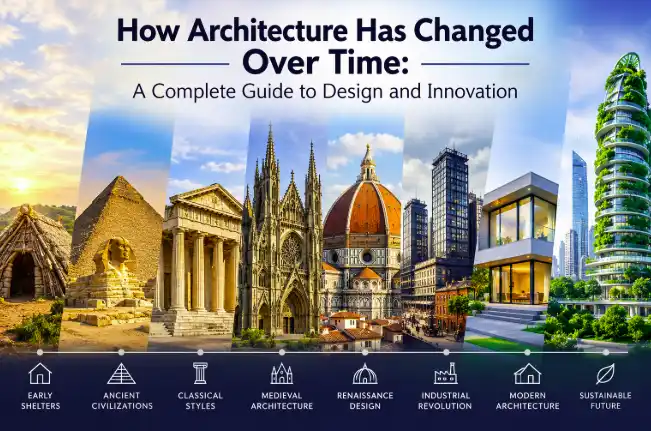
Architecture is an essential part of human civilization. It reflects how people live, work, express their culture, and respond to changes in society. From simple shelters built with natural materials to modern homes featuring innovative technology, architectural design has developed significantly throughout history. Each period has introduced new construction methods, materials, and design principles that continue to influence the buildings we see today.
In early communities, buildings were mainly designed to provide protection from weather and other dangers. As civilizations developed, architecture became more advanced and began to represent religious beliefs, political power, artistic expression, and social progress. Today, architects consider not only the appearance of a building but also its comfort, functionality, environmental impact, and long-term performance.
Understanding architectural history helps us appreciate the connection between traditional craftsmanship and modern innovation. It also explains why contemporary buildings combine practical layouts, creative forms, and sustainable materials to meet changing human needs.
1. Early Architecture: The Beginning of Shelter
The earliest forms of architecture developed when humans needed safe places to live. Early shelters were constructed from materials found in the surrounding environment, including branches, leaves, animal skins, mud, and stone. Their primary purpose was to protect people from harsh weather and provide a secure place to rest.
As communities began practicing agriculture, many people settled in permanent locations. This encouraged the construction of stronger homes, storage buildings, and shared spaces. Mud bricks, timber frames, and stone walls became increasingly important because they provided greater durability than temporary shelters.
Early builders also learned to consider the local climate and landscape. In warmer regions, buildings needed shade and ventilation, while colder areas required structures that retained heat. These practical decisions established principles that remain important in modern architectural design.
Although early shelters were simple, they represented a significant achievement. They demonstrated how people could use available resources to create spaces that supported safety, family life, and community development.
2. Ancient Civilizations and Architectural Innovation
Ancient civilizations transformed construction into a sophisticated combination of engineering, craftsmanship, and artistic expression. Egyptians, Greeks, Romans, and other societies developed distinctive architectural traditions that continue to influence buildings around the world.
Egyptian Architecture
Ancient Egypt is famous for its pyramids, temples, and monumental stone structures. Egyptian builders developed impressive construction techniques and carefully organized large projects involving substantial amounts of labor and materials.
The pyramids demonstrate the importance of planning, geometric understanding, and structural stability. Temples featured organized spaces, carved columns, and decorative details connected to religious beliefs.
Egyptian architecture showed how buildings could communicate cultural identity while serving practical and ceremonial purposes.
Greek Architecture
Greek architecture emphasized symmetry, proportion, and visual balance. Builders developed three well-known column styles: Doric, Ionic, and Corinthian. Each style featured distinctive proportions and decorative characteristics.
Greek temples and public buildings were carefully arranged to create a sense of order. Their architectural principles influenced later European buildings, including museums, government institutions, universities, and private residences.
The Greek emphasis on proportion remains relevant today because balanced forms can create spaces that feel organized and visually appealing.
Roman Architecture
Roman architecture advanced construction through the use of arches, vaults, domes, and concrete. These techniques allowed builders to create larger interiors and more complex structures than many earlier building methods permitted.
Romans constructed roads, bridges, aqueducts, amphitheaters, public baths, and residential buildings. Their work demonstrated that architecture could support everyday life while also improving public infrastructure.
Roman engineering influenced later construction traditions and helped establish techniques that remain important in modern structural design.
3. Medieval Architecture and Cultural Identity
During the medieval period, architecture developed according to religious traditions, political conditions, and local building needs. Castles, churches, monasteries, mosques, and fortified settlements became important features of many regions.
Romanesque architecture commonly featured thick walls, rounded arches, and relatively small windows. These elements helped create solid structures with a strong visual presence.
Gothic architecture later introduced pointed arches, ribbed vaults, and flying buttresses. These structural innovations allowed many churches and cathedrals to reach greater heights and include larger windows. Stained glass brought colorful natural light into interiors, creating distinctive visual experiences.
Architecture also developed differently across cultures. Islamic architectural traditions incorporated geometric patterns, courtyards, domes, arches, and detailed decorative work. Regional materials and local climates influenced the forms of these buildings.
The medieval period demonstrates that architecture is not simply about construction. It also expresses cultural values, spiritual beliefs, artistic traditions, and the identity of the communities that create it.
4. The Renaissance: A New Approach to Design
The Renaissance began in Europe during the fourteenth century and encouraged renewed interest in classical art, mathematics, science, and philosophy. Architects studied ancient Greek and Roman buildings to understand their proportions, geometry, and structural arrangements.
Buildings from this period often featured symmetrical facades, carefully organized spaces, columns, domes, and balanced decorative elements. Architects used mathematical principles to create a stronger relationship between different parts of a structure.
This period also helped establish architecture as a discipline combining artistic vision with technical knowledge. Drawings, measurements, and detailed planning became increasingly important in the design process.
Renaissance principles continue to influence residential and commercial buildings. Symmetry, proportion, and carefully arranged entrances remain common features in many traditional and contemporary designs.
The period represented an important shift toward more systematic architectural planning and a deeper understanding of how design could influence the experience of a space.
5. The Industrial Revolution and Modern Construction
The Industrial Revolution brought major changes to architecture during the eighteenth and nineteenth centuries. Industrial manufacturing made new construction materials and production methods increasingly available.
Iron, steel, glass, and improved concrete technologies expanded the possibilities for building design. Stronger structural systems allowed architects and engineers to create larger interiors, wider openings, and taller buildings.
Factories, railway stations, warehouses, and exhibition halls reflected the requirements of expanding industries and growing cities. As urban populations increased, buildings needed to accommodate more people and support new forms of transportation, business, and manufacturing.
Steel-frame construction became particularly important for tall buildings because it reduced dependence on thick load-bearing walls. Large glass panels also helped bring more daylight into interiors.
These developments changed both the appearance of architecture and the way buildings were constructed. They established the technical foundation for modern skyscrapers, commercial centers, and many contemporary residential structures.
6. Modern Architecture: Simplicity and Function
Modern architecture became influential during the late nineteenth and twentieth centuries. Many architects began moving away from heavy ornamentation and focused instead on clean lines, practical layouts, and the effective use of materials.
Modernist buildings frequently feature geometric forms, open interiors, large windows, and relatively simple facades. Concrete, steel, and glass became important materials because they offered new structural and visual possibilities.
Function became a central consideration in the design process. Homes were planned to support daily activities, while offices and commercial buildings were organized around movement, efficiency, and practical requirements.
Open-plan living areas became popular in many homes because they connected kitchens, dining rooms, and lounges. This arrangement can improve natural light and create a stronger sense of spaciousness.
However, good modern design involves more than appearance. Privacy, ventilation, accessibility, storage, and comfort are equally important. Successful architecture balances simplicity with the needs of the people who use a building.
7. Digital Technology and Contemporary Architecture
Digital technology has transformed how architects develop and communicate their ideas. Computer-aided design tools allow professionals to create accurate drawings, examine complex shapes, and modify plans more efficiently.
Building Information Modeling, commonly known as BIM, creates detailed digital representations of buildings. These models can help coordinate structural elements, electrical systems, plumbing, and other components before construction begins.
Three-dimensional visualization allows designers and clients to explore a proposed building before it is built. Different materials, lighting arrangements, room layouts, and exterior finishes can be compared during the planning stage.
Modern construction methods have also introduced prefabrication. Individual components can be manufactured away from the construction site and assembled later, helping improve consistency and potentially reduce construction time.
Smart building technology offers additional opportunities. Automated lighting, temperature controls, and energy monitoring systems can improve convenience and help manage resource consumption.
When considering how architecture has changed over time kdainteriorment, digital innovation is an important part of the story because it has changed not only building styles but also the process of planning, testing, and constructing buildings.
8. Sustainable Architecture and Environmental Design
Environmental responsibility is becoming an increasingly important part of architecture. Buildings require energy and materials throughout their life cycles, making sustainable design essential for reducing unnecessary resource consumption.
Energy Efficiency
Energy-efficient buildings are designed to reduce heating, cooling, and lighting requirements. Insulation, suitable windows, natural ventilation, and careful building orientation can improve indoor comfort while reducing energy use.
Solar panels and other renewable energy systems may provide additional benefits when local conditions and building requirements make them suitable.
Sustainable Materials
Architects increasingly consider materials based on durability, resource use, and environmental impact. Responsibly sourced timber, recycled steel, and materials containing recycled content may support more sustainable construction.
Long-lasting materials can also reduce maintenance requirements and the need for frequent replacement. Choosing appropriate materials depends on climate, budget, availability, and the intended use of the building.
Natural Light and Green Spaces
Large windows, shaded courtyards, planted roofs, and landscaped outdoor areas can improve the relationship between buildings and nature. Depending on the design, these features may provide daylight, shade, rainwater management, and opportunities for outdoor activities.
Sustainable architecture shows that environmental performance and attractive design can work together. A well-planned building can provide comfort while making more responsible use of natural resources.
9. How Architecture Has Changed Interior Living Spaces
Architectural developments have influenced the way people experience their homes. Traditional houses often contained separate rooms with clearly defined purposes, while many modern homes include flexible layouts that connect common living areas.
Advances in lighting, ventilation, heating, plumbing, and insulation have improved indoor comfort. Modern kitchens, bathrooms, storage solutions, and workspaces are designed to support changing lifestyles.
Interior materials have also become more varied. Wood, natural stone, ceramic tiles, glass, metal, and engineered surfaces offer different combinations of style, durability, and maintenance needs.
Today, architects and interior designers often coordinate building layouts with furniture placement, lighting, color schemes, and storage requirements. This approach can create a more consistent relationship between the structure and its interior spaces.
However, no single layout works for everyone. Some households prefer open living areas, while others need separate rooms for privacy, study, or work. The best design responds to the people who use the space rather than following a trend without considering practical needs.
10. The Future of Architecture
The future of architecture will likely combine advanced technology, sustainable construction, and a stronger focus on human needs. Population growth, urban development, and environmental challenges will continue to influence how buildings are designed.
Artificial intelligence may help architects compare design options, analyze energy performance, and identify possible improvements. Nevertheless, professional judgment will remain essential for addressing local regulations, cultural expectations, construction limitations, and user requirements.
Flexible buildings may become more important as workplaces, households, and communities change. Designing spaces that can adapt to different purposes can extend their useful lives and reduce the need for major reconstruction.
Climate-responsive architecture will also play a significant role. Depending on their location, buildings may need to manage extreme heat, heavy rainfall, flooding, or strong winds. Appropriate materials, site planning, insulation, and structural engineering can improve resilience.
The future is not only about creating taller buildings or unusual shapes. It is about designing environments that are safe, affordable, comfortable, durable, and environmentally responsible.
Conclusion
Architecture has developed from basic shelters into a complex discipline that combines creativity, engineering, technology, and environmental awareness. Ancient civilizations established important construction principles, medieval builders explored new structural forms, and the Industrial Revolution introduced materials that transformed modern construction.
Modern architecture brought greater attention to function and simplicity, while digital technology made planning and visualization more advanced. Sustainable design is now encouraging architects to consider energy efficiency, material choices, and the long-term impact of buildings.
Understanding how architecture has changed over time kdainteriorment helps explain how historical discoveries continue to influence contemporary homes, offices, and public spaces. Although architectural methods and materials will keep evolving, the main purpose remains consistent: creating buildings that improve everyday life.
As society moves forward, successful architecture will depend on balancing innovation with practical needs, cultural identity, environmental responsibility, and thoughtful design. See More